
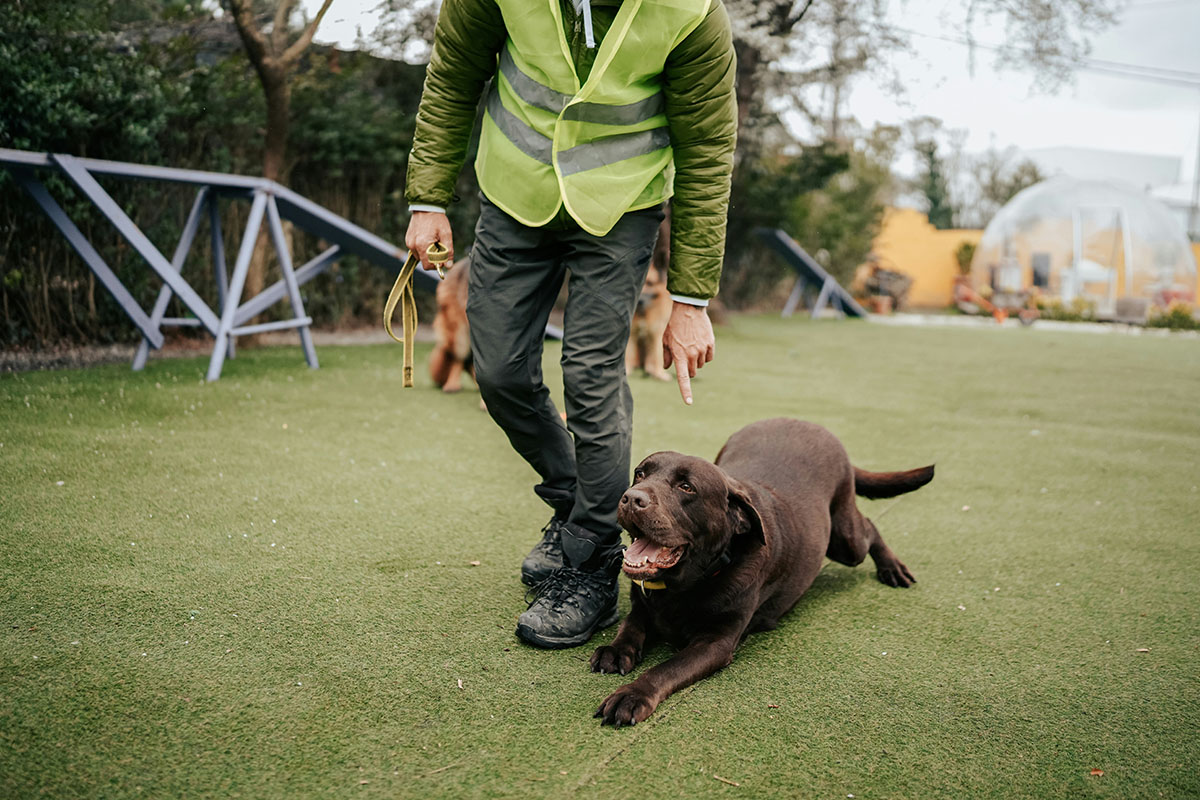
Most dog owners expect to do some training at home, whether that means teaching basic commands, improving recall or simply helping their dog settle into family life.
But sometimes certain behaviours become frustrating, difficult to manage or simply don’t improve despite your best efforts.
That doesn’t mean you have a “bad dog”, and it certainly doesn’t mean you have failed as an owner. In many cases, a little professional guidance can make a huge difference by helping you understand why the behaviour is happening and showing you practical ways to improve it.
Here are five common signs that your dog could benefit from professional training.
1. Walks Have Become More Stressful Than Enjoyable
Walking your dog should be one of the most enjoyable parts of the day, but for many owners it can quickly become stressful.
Constant pulling on the lead, lunging towards other dogs, stopping repeatedly or becoming overexcited around people can make even a short walk feel like hard work.
Lead pulling is especially common, and the longer it continues, the more established the habit can become.
Professional training can help identify what is causing the behaviour and teach both you and your dog how to make walks calmer and more controlled.
The goal isn’t simply to force your dog to walk beside you. Good training helps your dog understand what is expected while making it easier for them to focus on you, even when there are distractions nearby.
2. Your Dog’s Recall Is Unreliable
A dog that comes back when called gives you far more freedom and confidence when you are out walking.
Unfortunately, many dogs have excellent recall in the house or garden but suddenly appear to forget their name the moment something interesting appears in the distance.
Other dogs, people, wildlife, smells and open spaces can all be far more exciting than their owner calling them back.
Reliable recall takes time, consistency and plenty of positive reinforcement.
A trainer can help you build recall gradually, starting in controlled environments before introducing more distractions.
Most importantly, good recall training teaches your dog that returning to you is always worthwhile.
3. Your Dog Becomes Overexcited Around People
Jumping up, barking, racing around the house or becoming completely overexcited when visitors arrive are very common behaviours.
While they may seem harmless at first, they can become difficult when the dog gets bigger, when children or elderly visitors are involved, or when the behaviour simply becomes too much to manage.
Dogs often repeat behaviours that successfully get attention, even when that attention comes in the form of being told to get down.
Training can help your dog learn calmer ways to greet people and understand that relaxed behaviour is more rewarding than jumping or demanding attention.
This can make visitors, walks and everyday interactions much more enjoyable for everyone.
4. Your Dog Reacts Strongly to Other Dogs, People or Situations
Some dogs become very vocal, anxious or difficult to control around certain triggers.
This might include barking or lunging at other dogs, reacting to cyclists or cars, becoming nervous around unfamiliar people or struggling in busy environments.
These behaviours are often described as “reactivity”, but the reason behind them can vary significantly from one dog to another.
Fear, frustration, excitement, lack of confidence and previous experiences can all play a part.
This is one area where professional guidance can be particularly valuable.
Rather than simply trying to stop the behaviour in the moment, a trainer can help identify what is causing the reaction and work on improving how your dog responds over time.
The earlier these behaviours are addressed, the easier they can often be to manage.
5. Your Dog Struggles to Settle or Listen Consistently
Some dogs seem to be constantly on the go.
They may follow you everywhere, demand attention, struggle to relax, ignore commands when excited or find it difficult to switch off even after exercise.
Owners sometimes assume that the solution is simply more walking or more physical activity.
Exercise is obviously important, but dogs also need mental stimulation, structure and the ability to relax.
Training can help create clearer routines and boundaries while teaching your dog that calm behaviour is something worth rewarding.
A dog that understands how to settle is often easier to live with and better able to concentrate during training.
Professional Training Isn’t Just for “Problem Dogs”
One of the biggest misconceptions about dog training is that you only need a professional trainer when something has gone badly wrong.
In reality, training can benefit dogs of every age and temperament.
Some owners want help with a new puppy. Others want better recall, calmer walks or improved manners around the house. Sometimes the goal is simply to understand your dog better and make everyday life easier.
Getting help early can often prevent small habits from developing into bigger problems.
Training should also involve the owner just as much as the dog. A good trainer will explain why certain behaviours are happening and give you practical techniques that you can continue using long after the training session has finished.
Small Changes Can Make a Big Difference
Dog behaviour rarely changes overnight, but consistent training can produce significant improvements.
If any of the signs above sound familiar, you don’t need to wait until the problem becomes more difficult to manage.
A professional training session can help identify what is happening, explain why your dog may be behaving that way and give you a clear, practical plan to work on.
Sometimes a few small changes in how we communicate with our dogs can make everyday life much easier — for both dog and owner.


